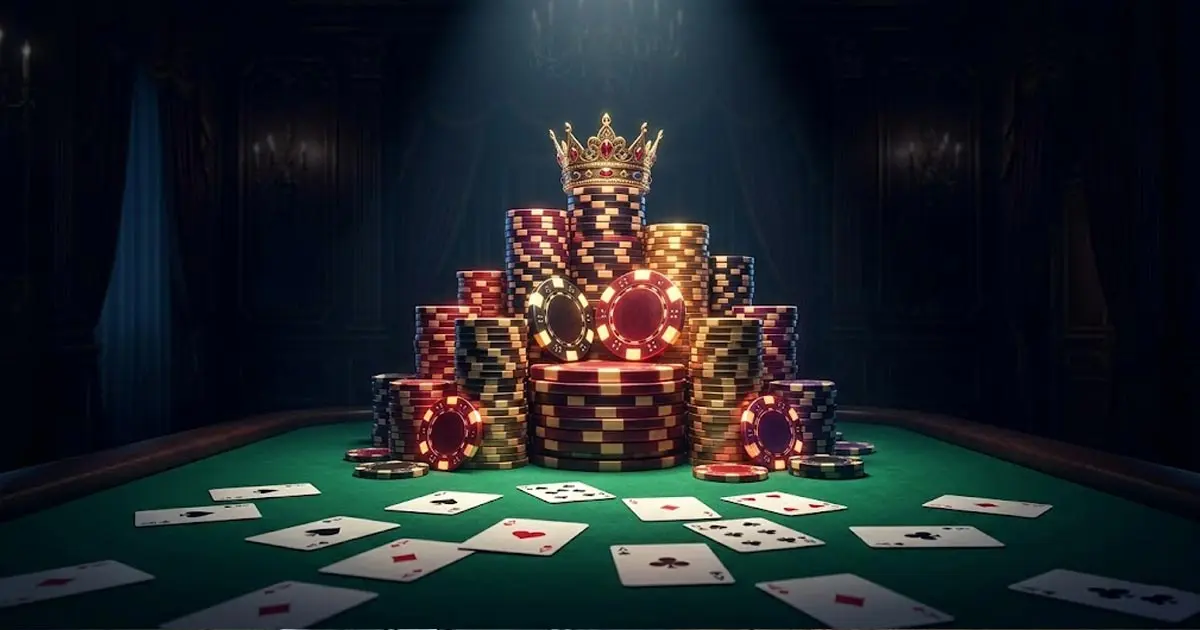
The house always wins artwork is any piece of artwork that incorporates, illustrates or undermines the famous gambling saying. Mathematically, it means that a casino known as the house will make a profit over the long haul since each game the casino offers has a statistical advantage known as the house edge. The term ‘casino’ is derived from the Italian word ‘little house’ which dates back to the Latin ‘cottage’, casa. The phrase was first recorded in American popular use in the early twentieth century and was adopted into the wider culture of Las Vegas before eventually becoming part of the general parlance of English.
In the visual arts, it has become a malleable metaphor for systemic power, inevitability and the difference between individual hope and institutional reality. It is used by artists to discuss everything from gambling addiction to economic inequality to the nature of fate itself. The final outcome is a visual tradition that is very diverse in style and media, bound together by one loaded idea.
Key Takeaways
- The phrase “the house always wins” is a term that originated in the world of casino mathematics, which is the knowledge casino owners have to give them the edge over any player.
- This idea has been captured in a vibrant art tradition, from oil paintings to digital prints, satirical posters, and dark fantasy illustration.
- The term is not just about gambling; it’s about the power of systems, destiny, and the power of the individual.
- From original paintings to limited edition prints, game art to mixed media, collectors looking for “the house always wins” pieces will find them throughout ArtMajeur, ArtStation, and other online art platforms.
The Visual Language of Casino and Gambling Art
Symbols that convey the theme
The artists with the “house always wins” idea use the same set of symbols. Casino interiors, roulette wheels, dice, stacked chips, and playing cards are all commonly seen, with the ace and the joker being particularly prevalent. These objects have an immediate cultural legibility, meaning that nearly any viewer understands their meanings and what they suggest about power and risk.
Another common feature is the use of lighting. Casino-inspired paintings are often warm, amber and gold colours, typical of the lights of the casino, in contrast with dark shadows. This contrast conveys both glamour and danger at the same time. The lights of the gaming room help mask the statistical machinery that is running below.
The Joker is used as a recurring figure in the film
In this tradition of visual identification, one of the most well-known is a satirical poster by Thomas Kristensen titled The House Always Wins: A Dark Twist on Iconic Characters. The artwork features a large, joker-like figure with a happy expression, surrounded by smaller figures with cartoon-like faces and expressions, all set against a smoky, chaotic backdrop. Kristensen’s own description is that the work is a “powerful and satirical portrait that explores power, identity and the illusion of control” where the central figure’s gaze is “empty, tired and revealing. The piece takes a serious look at the roles people play in systems that they did not design, while utilizing familiar popular culture aesthetics.
The joker figure is a good choice. Traditionally, the joker card has no fixed rank in the deck, no fixed value, and is not predictable. If the face is institutional power, there’s an instant visual irony: The wildcard is the most controlled part of the game.
“The House Always Wins” in Dark Fantasy Art
A Theme That Travels Across Genres
The gambling metaphor has transcended the image of a real casino. In dark fantasy art and game illustration, it is used to refer to any interaction between a mortal character and a power that is too much for the mortal to handle, or does not care about the mortal. The house becomes a god, a fate, a social system or as in the Court of the Dead universe developed by Tom Gilliland at Sideshow Collectibles the celestial forces of Heaven and Hell who use the dead to drive their war.
That universe is one in which the three groups of the Underworld, Bone, Flesh, and Spirit, are grieving over a set-up they never wanted. It’s a literal retelling of the “house always wins” concept in dark fantasy style. In every illustration, the hand-drawn, penciled card art of the Court of the Dead: Mourners Call embodies this tension: beautiful, sympathetic characters, depicted in the imagery of death, for a game they never designed to win. In the Court of the Dead: Mourners Call Artwork guide on Shani Levni, there is a full guide to that game’s visual design and collectible figures.
This association between gambling metaphors and underworld visual traditions is no coincidence. They both raise the human questions: What do you do when the odds are set, and what is resistance?
Artists Working in This Space
Mikhey Chikov
The House Always Wins is an oil painting created by Russian painter Mikhey Chikov in 2024, which is included in the ArtMajeur collection. The concept of the game is introduced in figurative painting, its weight and texture, which give the abstract idea physical gravity. Chikov’s work is part of a longer tradition of employing classical technique to question the systems of power and chance of today.
Thomas Kristensen
Kristensen’s work is satirical, utilizing the iconography of pop culture, the works are instantly accessible and visually arresting, as described above. His prints are sold by Printler and his designs are for those interiors that invite further discussion and provocation.
ArtStation Community
There are several works on the ArtStation platform that have the same title or theme.There are several works on the ArtStation platform with the same title or theme. One of the most interesting posts, posted in January 2025 under the title You Know What They Say, the House Always Wins, is a typical example of how digital concept artists in game art and entertainment design regularly interact with the theme, not as a political statement, but as a straightforward work of visual storytelling about stakes, tension, and the loaded atmosphere of risk.
Collecting “The House Always Wins” Artwork
What to Look For
There are a number of categories to consider for buyers who are interested in works of this visual tradition. Original paintings on physical support (oils, acrylics, or watercolours) are the most valuable and most direct expression of the artist’s hand. Limited edition signed prints fall somewhere between: They are more affordable, but the quality ones are still made in small runs using archival materials.
Digital prints and posters are the most common format. Quality varies significantly. The main difference lies in the quality of the paper and inks used and the fact that the former are printed on demand on regular paper while the latter are printed on acid-free paper using archival inks, which are of a higher quality. Archival materials are the backbone of a collection that will last for the long haul when it comes to any piece of art that will be displayed for years to come.
A subcategory of this visual tradition is mixed-media works, game art originals, and collectible miniatures associated with dark fantasy universes. Game art has become acknowledged as a fine art form and original boards, card art and concept artwork from well-known game properties are now being collected seriously.
These Works are available at the following locations:
| Platform | Best For |
| ArtMajeur | Original paintings by independent artists |
| ArtStation | Digital concept art and game illustration |
| Printler | Curated art prints from independent artists |
| Sideshow Collectibles | Dark fantasy figures and art prints |
| Etsy | Handmade and small-edition works |
| eBay | Secondary market originals and vintage casino art |
The Phrase in Other Visual Media
The “house always wins” theme has been applied to visual storytelling in games, movies, and comic books. Mr. House, one of Fallout: New Vegas’ characters, embodies the gambling metaphor, and an entire faction quest arc is dedicated to him under the title The House Always Wins. The achievement art for the quest is a carefully crafted visual communication in which the casino’s institutional persona is the friendly mascot with a tilted head, the default expression of the Vault Boy.
The House Always Wins is a tabletop roleplaying game created by Clawhammer Games and Sebastian Fazio that is entirely visual and narrative, centered around the term ‘the House’, which is not a building or a person, but a group of abstract forces operating in concert that are invisible, systemic, and fundamentally against the players.
The examples show how much the visual tradition has penetrated into the contemporary culture. No matter the medium, whether it’s oil paint, digital illustration, collectible miniature, or video game achievement icon, the image is always the same: beauty, danger, and the awareness that the game was made by a non-player.
Also read more about Shani Levni
This section provides a summary and recommendations for collecting
The “house always wins” artwork is an old and diverse visual tradition, with much more to it than just the gambling idiom. Artists have used this phrase to examine power, destiny, beauty, and the extent of agency in Mikhey Chikov’s oil paintings, satirical digital prints by Thomas Kristensen, and Fallout: New Vegas’ achievement icons.
The field has real range for collectors, from the low-cost limited editions at Printler and ArtMajeur, to the original art from independent artists, to the collectible dark fantasy items from publishers such as Sideshow Collectibles. The rule for all prices is the same: understand the edition, check the archival value of the items, and select pieces that have enduring value.
Frequently Asked Questions
What is the meaning of the artwork “the house always wins”?
Any artwork that is painting, print, illustration, or collectible subject or conceptually based on the gambling term “the house always wins. The term refers to the statistical edge that the casino has and is used in art as a metaphor for system and personal restriction.
Who are the key artists of this theme?
Some of the key artists are Mikhey Chikov (oil painting) through ArtMajeur, Thomas Kristensen (satirical digital prints) through Printler, and many concept artists on ArtStation with a focus on game illustration and dark fantasy. The theme also permeates the Court of the Dead visual universe of Tom Gilliland at Sideshow Collectibles.
What is the best place to purchase “the house always wins” art?
ArtMajeur has original paintings for sale. Prints and posters can be found on Printler and Etsy. Sideshow Collectibles and other shops offer game-related dark fantasy art and collectibles. Vintage casino art is sold at eBay and at auction houses specializing in secondary market originals.
What are the most common symbols found in this kind of artwork?
The most common visual elements are playing cards (especially the ace and the joker), roulette wheels, dice, stacked chips and the interior of the casino. Lighting is warm amber and neon over dark shadow. Smiles are often portrayed with an empty expression, reminiscent of the performance needed from the casino staff and players.
Is the house always winning artwork a known collecting category?
Not a formal auction category, but a recognized theme grouping in the art of the casino, pop art, dark fantasy illustration and game art. With the recognition of game art as a fine art, the art from well-known game properties is now being regarded as a serious collectible.
What is the theme in dark fantasy and game art?
It is a common term in dark fantasy, for destiny, system, or an enemy that is too powerful to overcome with traditional methods. Some notable exceptions are the Fallout: New Vegas quest arc and the gameplay of Court of the Dead: Mourners Call, in which the player plays as a mourners fighting against the rigged celestial system of Heaven and Hell.