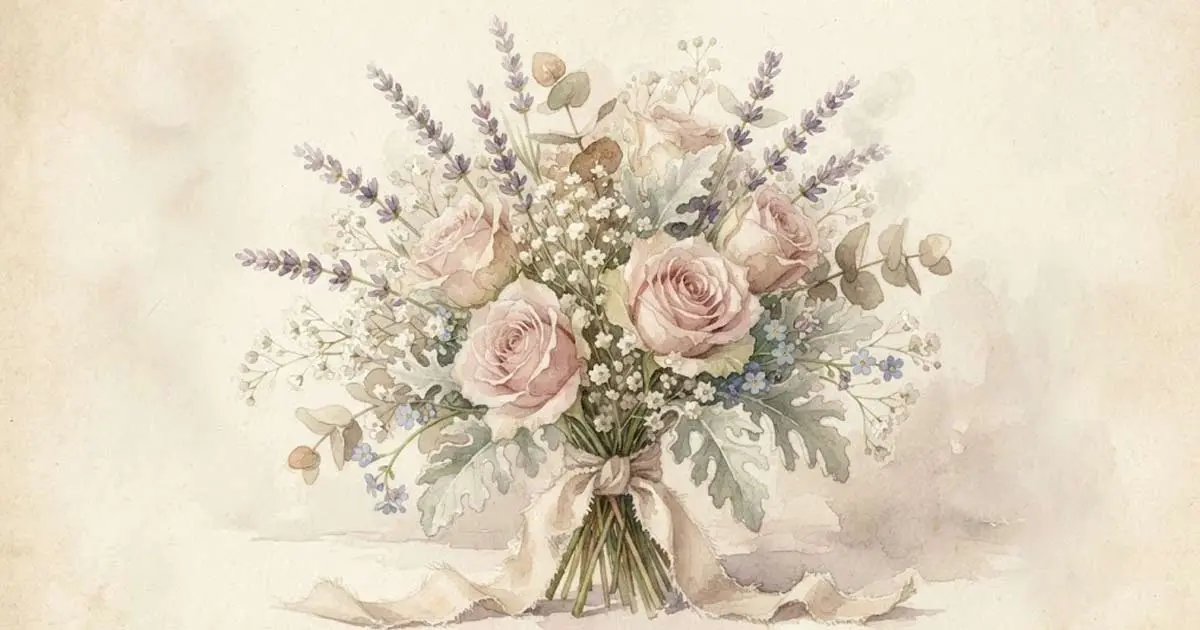
Memorializing flowers in painting is to make a permanent visual record of flowers that would otherwise fade, whether it is a bouquet from a wedding, a flower arrangement in a funeral, a garden harvest or a flower that was given at a significant moment. From pressing flowers into a frame, to hand painting a watercolour portrait of a flower, to resin embedding the flower for a three dimensional keepsake. Both methods create a different type of permanence and the selection of the one is determined by the flowers that are available, the time and materials available, and the type of art the memorial is intended to be.
Key Takeaways
- The easiest way to memorialize flowers in a painted or framed piece of art is pressed flower art, and it only takes heavy books, absorbent paper, and archival glue to make a framed art display.
- Resin casting is a method of preserving flowers in three dimensions in a clear, durable medium, and makes keepsakes such as frames, coasters, paperweights and jewellery.
- Botanical watercolor painting is an art form that captures the likeness of a flower on archival paper in a manner that’s centuries old in the scientific and artistic tradition, creating a unique hand-painted record.
- Color and shape can be preserved best before adding flowers to mixed-media art by silica gel drying, which is more effective than air drying alone.
- Blossom and Rhyme say it takes two to three months for their process of professional flower preservation, which includes careful deconstruction, drying, colour restoration and final arrangement.
- The flowers that will dry well are roses, carnations, chrysanthemums and hydrangeas. Lilies, orchids and other fine flowers may need to be pressed flower by flower.
- For pressed flower art that is meant to last, archival, acid-free paper and adhesives are essential – non-archival paper and adhesives will yellow and break down, making the art last much shorter.
- Handwritten notes, photographs, dates or botanical herbarium cards can be added to framed pressed flower art to make a complete personal memorial piece.
The options of painting, preservation and mixed media
There are at least three ways to ‘memorialize flowers in painting’ and clarifying the difference from the beginning makes a selection easier.
Pressed flower art is created by drying and flattening the flowers and mounting them on paper or fabric with archival adhesive, and framing. The outcome is a frame of art created from the actual flowers, not a painting of the flowers.
Botanical watercolor painting is the process of creating a hand painted likeness of the flowers on archival paper that captures the color, form and detail without being done with the flowers themselves. The flowers are studied (either in the field, from a photograph or preserved flowers) and then rendered in paint.
Mixed media memorial art combines both of these methods: pressed flower pieces are integrated into a painted background or painted details are added around preserved pieces to form a whole.
Instead of a traditional framed painting, resin preservation is used to surround the three dimensional physical flower with clear resin to create a keepsake block, coaster, sphere or jewellery piece.
These methods are studied in detail below.
Method 1: Pressed Flower Art (Using the Original Blooms)
The art of pressing flowers is one of the oldest ways to preserve flowers, and it has been a popular technique for centuries. Bramble and Beyond says that this method has been practiced for centuries among many cultures and is one of the most individual and repeatable of any flower, paper and time.
Step 1: Select and Prepare the Flowers
Pick flowers that aren’t too dense, according to Bramble and Beyond. Flowers that are flat in shape, such as pansies, daisies and violas are best. When using large flowers such as roses, try to flatten single petals instead of the entire flower. Remove any dirt or insects and cut the stems short around the flower head.
Condition matters. Windflower Florist says to examine the flowers to be sure they are fresh, not damaged before being pressed. Wilted or bruised flowers will not press as well and the damage will stand out more when dry.
Step 2: Press the Flowers
Arrange the flowers between layers of absorbent paper, like parchment or blotting paper. Windflower Florist says to lay the flowers in a single layer, but not too thick, and keep them from overlapping. Place another piece of absorbent paper over it.
Stack the paper in a heavy book or wooden flower press. Place more books or weights on top to make sure that pressure is applied evenly. Wait about two weeks to see the flowers grow. Check periodically to make sure they are drying out and to avoid mould.
On paper choice: As per the pressed flower art guide by Stevie Storck, paper towels are not recommended as they will create an embossed pattern on the pressed flowers. Something a bit heavier, like cardstock or watercolor paper works better. The paper should be archival and acid free.
Step 3: Organize and Attach the Pressed Flowers
After complete drying, gently pick up the flowers with the tweezers. The dried specimens are very delicate and fragile, so they can be picked up with tweezers, says Stevie Storck. In the event of a specimen breaking in handling, the parts may be reassembled in the mounting stage.
Place the dried flowers on the background paper/ fabric without glue to plan the composition. Think about the distance between the elements, the contrast between large and small flowers, and any additional elements you wish to add.
Once you’ve decided on your final arrangement, apply small dots of glue with a fine paintbrush or cotton swab to the back of each specimen, according to Stevie Storck. Press firmly to get an even adhesion of the pressed botanicals to the paper.
Use clear and matte archival quality glue. Both mod-podge and the standard PVA craft glue work well and have been used for decades in botanical collage work.
In Step 4, add Personal Elements
Stevie Storck says that a botanical herbarium card can be created and printed on ivory paper and affixed to one corner of the composition. This art piece became a documented record instead of just a decorative object by having a herbarium card record the common and scientific name of each flower, its location, and date. You can buy antique herbarium cards from Chairish, eBay or create your own at home.
Other items that can be added are handwritten notes, dates, photographs, and small personal mementos. Some of the memorial items include handwritten notes, dried leaves, small charms and even bits of cloth as well as the flower specimens, Blossom and Rhyme say. These elements can be combined in pressed designs as appropriate to each person’s memorial.
Step 5: Enclose the Art
Wait at least 30 minutes before framing to ensure that all glues are dry. Choose a frame that has UV-protective glass to avoid fading with time. Thicker pressed parts can be accommodated in deep frames, which have a slight three-dimensionality. To preserve the composition, mount the finished work on acid-free backing board before putting it in the frame.
Botanical Watercolor Painting is method #2.
Botanical watercolor painting is a type of hand-painted depiction of flowers, which does not involve the use of flowers as a medium. This method is suitable when flowers are no longer in bloom, when they are too delicate to withstand pressing, or when the intent is to create an artwork rather than preserve the composition of the flowers.
Method 2: Botanical Watercolor Painting
Botanical illustration has been a tradition for centuries, both as documentation and fine art. Naturalists hired painters to paint the plant species they discovered in detail during the 17th-19th century, as a way of making a permanent visual record. The same discipline of careful observation of the form, color and structure of the flower is directly applicable to the practice of memorial painting today.
What Botanical Watercolor Painting Involves
Botanical illustration has a centuries-long tradition as both scientific documentation and fine art. The practice reached its height during the 17th to 19th centuries, when naturalists commissioned detailed paintings of newly discovered plant species to create permanent visual records. The same discipline, close observation of the flower’s form, color, and structure translated into precise painted representation, applies directly to contemporary memorial painting.
Materials required:
- Watercolor paper (standard is 300 gsm cold-press)
- High quality watercolor paints matching the color of the flowers to be painted.High quality watercolor paints of the flower colors to be painted.
- Fine round brushes (size 00 or 1) for details and larger wash brushes (size 8 to 12) for background and petals
- A pencil to do initial sketches on the paper.
- The living flower or a good photograph or a pressed specimen of the flower to use as a reference.
The Painting Process
Draw a rough pencil sketch of the general shape of the flower, including the placement of the petals, the central structure, and any leaves. Use light pencil marks that will not show through the watercolor.
Use light washes first in watercolor, working up to darker color and shadow. Botanical illustration convention is usually done light to dark, with layers of glazes to give definition, not opaque paint.
In the finishing stages the finest brushes available are used to detail the veining of petals, the texture of stamens and the gradation of color towards the flower’s center.
If a flower species is being honored, the Latin name of the species can be added, and the painting can have additional information for memorial purposes, such as the name of the person being honored, or the date of a significant event.
Method 3: Resin Casting with Flowers
Resin casting is a three-dimensional keepsake, not a framed flat art however, is often requested as a keepsake of the flowers, and is a permanent record of the original art. Blossom and Rhyme say that resin preservation involves suspending the flowers in a clear, stable substance that preserves their three dimensional shape.
The Resin Process
Step 1: Drying the flowers. Fresh flowers should not be put directly into the resin as they will turn brown. Bouquet Casting Co. states that the most effective way to preserve shape and color prior to resin work is silica gel drying. Carefully put individual flowers in a container with silica gel and let dry for a few days. This helps to maintain the natural form of the flower more than air drying or book pressing.
Step 2: Place flowers in silicone mold. Place the dried flowers in the mold so that they fit well and form an aesthetically pleasing arrangement. Silicone molds are preferred because the resin comes out easily without the use of a release agent with the flexible silicone mold.
Step 3: Thinly pour resin in. Bouquet Casting Co. says to pour in one thin layer at a time. Once the flowers have been arranged, pour a thin layer of resin and let it set for approximately 24 hours before pouring the next layer. Do not pour in thick layers, as thick resin will produce heat which can burn flowers or cause visual distortion in the cured resin.
Step 4: Mix and apply the resin exactly. Follow the manufacturer’s instructions for resin mixing; using the type of resin recommended by the mold manufacturer; mixing resin in the correct proportions and thoroughly mixing the resin. If the ratios are not accurate, the resin will be sticky or cloudy.
Resin can be turned into coasters, paperweights, display blocks, a sphere shape, pendants or necklaces. Blossom and Rhyme also say resin is ideal for embedding flowers in wearable keepsakes, like necklaces, for people who prefer to hold or wear something over just display it.
Method 4: Mixed Media Memorial Art
Mixed media memorial art is art that is created using flower elements that have been physically preserved, but with hand-painted backgrounds, so that the art is not purely pressed flower art, nor purely botanical illustration, but a synthesis of both.
Approaches to Mixed Media
Pressed flowers on painted backgrounds: Use watercolor or acrylic to paint an abstract or representational background. Allow to dry completely. Archival adhesive was used to mount pressed flowers on the painted background. The combination of the painted surroundings and the physical flowers adds depth and visual interest that neither could offer alone.
Multiple media in a shadow box: A shadow box frame can hold 3-D items as well as flat items. Dried or pressed flowers may be used in a frame with photographs, letters, handwritten notes and painted paper components in the same frame.
Botanical collage: Torn or cut painted papers, mixed with pressed flower parts and hand lettered text to create a collage that uses painting, pressed flowers and typography in a single composition. This is especially good for vintage or botanical illustration style pieces.
The use of actual botanical specimens in conjunction with painted and written records is an old art historical practice. In both the herbarium and the botanical journals of the 17th and 18th centuries, and in the illuminated manuscript traditions of medieval Europe, physical specimens or detailed botanical imagery were accompanied by text and decorative painted elements. This tradition is directly engaged by contemporary art in the memorial form of mixed media.
The process of a particular visual tradition transmitting meaning over the course of many centuries by means of the physical preservation of botanical material is one that is shared by memorial flower art and the history of the ways in which cultures preserve memory through image-making. This same physical-to-cultural documentation link is explored in the context of an entirely different tradition in the guide to Day of the Dead art, where marigolds, sugar skulls, and ofrenda altars again use physical natural materials to create lasting memorial art.
How Long Does Flower Preservation for Art Take
The time frame is very different for each method.
| Method | Preparation Time | Drying/Curing Time | Total |
| Basic book pressing | 30 minutes | 2 to 3 weeks | 2 to 3 weeks |
| Silica gel drying | 30 minutes | 3 to 7 days | 1 week |
| Resin casting (DIY) | 1 to 2 hours | 24 hours per layer | 3 to 7 days |
| Botanical watercolor painting | Several hours | Dries between sessions | Ongoing |
| Professional preservation | Drop-off | 2 to 3 months | 2 to 3 months |
Andrea Cole’s professional preservation process takes 2-3 months, according to Wildly Native Flower Farm. Bouquets are meticulously deconstructed, preserved, color restored and then assembled into beautiful resin or pressed bouquets. The timeline shows the care that is needed at each step, such as airbrushing faded petals to restore the colors of the original flowers, to create finished pieces that will accurately represent the original flowers.
The least equipment and most patience is needed for DIY projects when it comes to book pressing. Silica gel drying can be faster and can yield a better colour retention. Resin work takes a little more supplies but is the longest lasting of the 3 dimensional flower types.
Which flowers last the longest for a memorial art?
Some flowers don’t press or dry well. The best candidates selected or prioritized for an arrangement will provide a better final product.
| Flower | Pressing Suitability | Drying Suitability | Notes |
| Roses | Individual petals: excellent | Whole bloom: good | Petals press beautifully; whole roses air-dry or silica gel |
| Carnations | Good | Very good | Retain color well through drying |
| Chrysanthemums | Good | Excellent | Strong candidates for both methods |
| Hydrangeas | Excellent | Excellent | Known for drying beautifully with minimal color loss |
| Pansies | Excellent | Moderate | Flat form presses perfectly |
| Daisies | Excellent | Good | Simple form translates well to pressed art |
| Lilies | Individual petals: good | Challenging | Too thick and moist for whole-bloom pressing |
| Orchids | Individual petals only | Challenging | Delicate; professional handling recommended |
| Lavender | Excellent | Excellent | Retains fragrance through drying |
| Baby’s breath | Excellent | Excellent | Ideal filler in both pressed and dried compositions |
Blossom and Rhyme say roses, carnations and chrysanthemums are good choices to preserve because they retain their shape and color well after drying, and are frequently used in sympathy arrangements.
Archival Materials: What to Use and Why It Matters
The durability of any memorial flower art is dependent on the materials that are used to create it. Non-archival materials deteriorate over a number of years or decades, yellowing, becoming brittle and destroying the specimens they were intended to preserve.
Paper: Ensure all backgrounds and mounting are made of acid-free archival quality paper. Art supply stores sell a wide variety of cardstock that has been rated as archival. Over time regular printer paper or construction paper will become brittle and yellow.
Adhesive: PVA (polyvinyl acetate) glue and archival Mod-Podge dry clear, flexible and stable over time. Rubber cement, hot glue and regular tape all deteriorate or yellow. Museum conservators use a conservation grade methylcellulose paste for extra security of fragile items.
Glass: UV-protective glass will prevent fading of the flower specimens or painted/printed items in a framed composition. Normal glass blocks UV rays which will fade colors over the years with indirect sunlight.
Frames: Acid-free mat board and archival backing board prevent the frame’s materials from transferring acidity to the artwork over time.
The quality of original artworks and how they are documented for the historical record is no different from that of a lasting artwork. In the guide to certificate of authenticity for artwork, the materials used for the document—archival paper, archival adhesive, and precise permanent recording are as important as the materials used in the artwork itself, in terms of ensuring the work and its record endure for decades.
Professional Memorial Flower Preservation Services
Professional flower preservation services can provide the expertise and equipment that most home projects cannot compete with, especially when preserving flowers that hold special meaning, like a wedding bouquet, funeral arrangement, or flowers received at a significant milestone.
Professional services can include customizing the design around specific preferences such as highlighting a specific flower, adding initials, dates, or even handwriting into the final design, Blossom and Rhyme say. Sometimes the most meaningful pieces are the most personal.
If you’re looking for a special arrangement where you want to keep as many of the elements intact, it’s best to hire a local expert, says Windflower Florist. In the case of flower shops, they will usually seek the advice of preservationists who offer preservation services such as freeze-drying, which produces life-like three dimensional mementos that are a copy of the original design.
Usually the same preserved flowers will be available in several different formats from the same company, such as a large block of resin for a mantlepiece or a smaller pendant necklace, or a pressed flower frame for home display or a botanical bookmark. This means that one set of preserved specimens can create more than one keepsake for various family members.
Conclusion
There are many ways of memorializing flowers in painting, each creating its own type of permanence. Pressed flower art is a piece of art that is created from the actual flower and it’s material and preserves the visual appearance of the flower. Botanical watercolor painting results in a lasting hand painted portrait, which preserves the image of the flowers as they were at a particular moment. The 3D blooms are encased in resin which can be held, worn or displayed. Mixed media is the use of all of these methods in one piece of artwork.
The selection of the method is not so much a question of which is the most “objective” method as it is a question of what type of object the memorial is intended to be. A framed pressed flower arrangement is a beautiful tribute to the physical form of particular flowers. A botanical watercolor portrait celebrates their presence and the artist’s connection with them. A resin pendant is in honour of them to carry close.
In each instance the most crucial decisions are taken at the outset: how to preserve the flowers as rapidly and carefully as possible when they are at their best; what materials are most suitable for the art that will be created, and how these materials will guarantee that the art will endure for the years and decades to come.
Visit all the content at Shani Levni to learn more about art traditions, painting techniques and how to create meaningful objects.
Frequently Asked Questions
How do you depict flowers in a painting?
There are several ways to create a painting of flowers as a memorial that can include pressing flowers and creating a framed composition, painting a watercolor portrait of the flowers on archival paper, embedding the flowers in resin to create a three dimensional keepsake or painting flowers with a background on a mixed media piece. The technique(s) used will vary based on the flowers available, the materials available, and the type of permanent artwork desired.
How long will it take to press flowers for framed art?
The flowers will dry thoroughly in about 2-3 weeks when pressed in a book. Silica gel drying is a 3- to 7-day process that is less destructive of color and shape than book pressing. Professional preservation takes 2-3 months and encompasses colour restoration and custom design.
What kind of flowers does one use for the memorial art of pressed flowers?
The flowers that are flat and thin, such as pansies, daisies, hydrangeas, or lavender, will press best and will leave the least clean. Other flowers that work well include roses, carnations and chrysanthemums, with individual petals of larger flowers being more effective than the flower as a whole. Lilies and orchids must be handled with care and should be pressed one petal at a time.
What supplies do I need to make pressed flower art?
Fresh, good quality flowers, absorbent paper (e.g., parchment or blotting paper), a heavy book or wooden flower press, archival quality background paper, archival adhesive (e.g., PVA glue or Mod-Podge), tweezers for handling dried flowers, and a frame with UV-protective glass for display.
What’s the best way to keep the colour in dried flowers for art?
Silica gel drying will also keep the color better than air-drying or book pressing because it will remove moisture quickly before oxidation can cause the petals to become dull. Faded petals are restored to their original color by other color restoration methods employed by professional preservation services, such as airbrushing. Pressing flowers right after cutting them, when they are at their freshest, will give the best color.
Is it OK to use flowers from a funeral arrangement for memorial art?
Yes. Typical sympathy flowers such as roses, carnations, and chrysanthemums make good candidates for pressing and drying for use in memorial artwork. Start preservation as soon as possible after the flowers are received, as those that have wilted will not press as well. Choose the best single flowers from the bouquet to preserve.
What is the best way to preserve pressed flowers for a long time?
Use archival quality acid-free paper for background and mounting, acid-free mat board, UV-protective glass in the frame, and a mat that will dry clear and flexible. Store framed piece in a stable, dry environment, out of direct sunlight. These measures can make a pressed flower composition last for decades rather than years as would a standard composition.