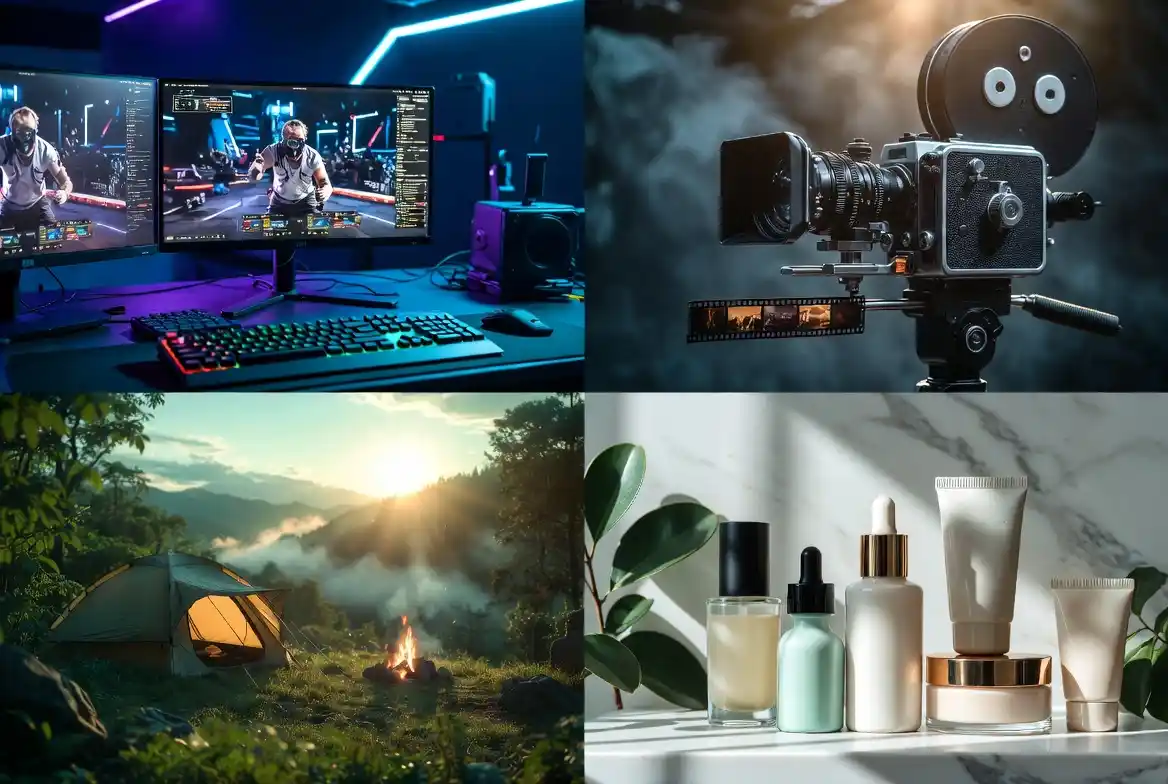
Why These Four Worlds Belong Together
Scroll through any lifestyle feed in 2026 and you will find the same pattern: someone streaming a Valorant ranked match at midnight, binging an esports documentary on a Sunday afternoon, planning a weekend hiking trip in a national park, and debating which vitamin C serum gives better results. These are not random interests — they are the signature of a generation that refuses to live in just one lane.
This article takes a different angle on these four subjects. Rather than skimming the surface, we go deeper — practical tournament guides for competitive gaming fans, a curated watchlist of gaming documentaries worth your time, a step-by-step camping framework for those who have never slept under the stars, and a no-nonsense skincare breakdown that actually makes sense.
Think of this as your personal lifestyle playbook — one resource that covers everything from tournament brackets to SPF ratings.
Part One: Navigating the World of Esports Tournaments
The Shift From Hobby to Profession
Twenty years ago, parents worried that video games were a waste of time. Today, those same games fund university scholarships, stadium sellouts, and million-dollar sponsorship contracts. Esports — organized competitive gaming — has quietly become one of the fastest-growing entertainment sectors on the planet.
The numbers tell the story plainly. Global esports viewership crossed 500 million in 2025, with revenue from sponsorships, media rights, and merchandise projected to surpass $3 billion by the end of 2026. What was once a niche subculture now commands the same media attention as traditional sporting leagues.
A Beginner’s Map of Major Tournaments
Walking into the esports tournament scene without context feels overwhelming. Here is a clear breakdown of the most significant competitions by game category:
Strategy Games
Dota 2’s flagship event, The International, remains the crown jewel of competitive gaming. Its prize pool — partly funded by fan purchases of in-game items — has historically dwarfed every other tournament in the industry. Regional qualifiers run throughout the year across six continents before teams converge for the main event.
StarCraft II, though older, maintains a passionate following particularly in South Korea, where the GSL (Global StarCraft II League) runs year-round and produces some of the most technically demanding matches in all of esports.
First-Person Shooters
Counter-Strike 2 replaced its predecessor in 2023 and quickly re-established the competitive ecosystem. Two Majors per year serve as the pinnacle events, with a qualification system that gives teams from every region a legitimate path to participation. Prize pools sit at $1.25 million per Major, but the prestige far outweighs the money.
Valorant, Riot Games’ tactical shooter, has grown at a remarkable pace since launch. The Valorant Champions Tour operates on a franchise model with permanent partner teams in three international leagues — Americas, EMEA, and Pacific — feeding into global Masters events and an annual Champions tournament.
Battle Royale and Open-World Competition
Fortnite’s Champion Series stands apart from most esports because of its accessibility. Unlike franchise-based leagues where entry is closed, FNCS uses an open-qualifier structure — theoretically any player skilled enough can compete at the highest level. This democratic approach has produced some of the most compelling underdog stories in competitive gaming.
How Tournament Formats Work
| Format | Description | Common In |
| Single Elimination | One loss and you are out — high pressure, fast results | Late-stage brackets |
| Double Elimination | Losers get a second chance through a lower bracket | CS2, Dota 2 Majors |
| Round Robin | Every team plays every other team — fairest format | Group stages |
| Swiss System | Teams with similar records are matched each round | CS2 RMR qualifiers |
| GSL Groups | Two groups of four, top two advance — hybrid format | StarCraft, some MOBAs |
Building Your Esports Viewing Routine
Keeping up with multiple esports titles simultaneously is genuinely difficult. Here is a practical system:
- Pick one or two games to follow deeply rather than six games superficially
- Follow official team and tournament accounts for schedule updates
- Use Liquipedia — a community-maintained wiki — for tournament brackets and results
- Watch VODs on YouTube for matches you missed rather than chasing live streams
- Join subreddits or Discord servers for the games you follow — community context makes matches more meaningful
The French-Speaking Esports Scene in 2026
France and the broader francophone community punch well above their weight in competitive gaming. Team Vitality, based in Paris, currently fields rosters across CS2, League of Legends, Valorant, Rocket League, and several other titles. Their partnership with infrastructure from Red Bull and other major sponsors has made them one of Europe’s most recognizable organizations.
Karmine Corp deserves special mention. Founded by streamer Kameto and former player Saken, the organization has built one of the most passionate fanbases in European esports — their matches regularly sell out venues and generate viewership figures that rival traditional football broadcasts in France.
French-speaking fans can follow all major tournaments with French-language commentary on Twitch channels run by both Vitality and Karmine Corp’s official media teams.
Part Two: Documentaries That Changed How the World Sees Gaming
Storytelling as a Gateway
Numbers and match results tell you who won. Documentaries tell you what it cost. The best films about competitive gaming strip away the highlight reels and reveal something more interesting — the psychology of competitors, the dynamics of teams under pressure, the sacrifices that rarely appear on camera.
For non-gamers, these documentaries function as entry points. For fans, they provide context and depth that raw gameplay cannot offer. Either way, they have played a meaningful role in shifting public perception of gaming from a childish pastime to a legitimate professional pursuit.
The Definitive Watchlist
For Newcomers to Esports
League of Legends Origins (Netflix, 2019) is the ideal starting point. Rather than focusing on a single tournament, it traces the full arc of how a game becomes a global phenomenon — from a small development studio in Los Angeles to a cultural force reshaping entertainment across Asia and Europe. No prior knowledge of the game is necessary to find it compelling.
For Those Who Want Raw Emotion
Free to Play (Valve, 2014) remains the benchmark. Three players — one from the United States, one from Ukraine, one from Singapore — prepare for the first International with a $1 million prize pool. The film does not shy away from difficult moments: strained family relationships, financial pressure, the physical toll of competing professionally. It is the closest thing esports has to a great sports film.
For Understanding Team Dynamics
The Netflix episode 7 Days Out: League of Legends gives viewers a rare look at the operational side of a major esports event. The focus is less on players and more on the production team — the hundreds of people whose work makes the spectacle possible. It reframes esports from something players do into something an entire industry creates together.
For Grassroots Stories
The Smash Brothers (2013) documents arguably the most unusual story in competitive gaming. Super Smash Bros. Melee was never designed as a competitive title. Nintendo largely ignored the tournament scene. Yet a dedicated community kept the game alive through sheer passion for over a decade, building a competitive ecosystem from nothing. The film is ultimately about what happens when a community decides something is worth preserving.
Films That Capture Gaming Culture
| Title | Year | Platform | Tone |
| Free to Play | 2014 | YouTube / Steam (Free) | Emotional, personal |
| League of Legends Origins | 2019 | Netflix | Inspiring, broad |
| 7 Days Out: LoL | 2018 | Netflix | Behind-the-scenes |
| The Smash Brothers | 2013 | YouTube (Free) | Grassroots, passionate |
| All Work All Play | 2015 | YouTube (Free) | Gritty, honest |
| The Final Boss | 2023 | Various | Strategic, corporate |
Gaming in Mainstream Fiction
Beyond documentaries, gaming culture has increasingly found its way into mainstream cinema and television. Ready Player One explored a future where competitive virtual reality becomes the primary form of social interaction. Free Guy reframed the relationship between game characters and players in a way that resonated with both gaming communities and general audiences.
These fictional works matter because they normalize gaming as a subject worthy of serious storytelling — something that would have seemed unlikely even fifteen years ago.
Part Three: A Practical Camping Framework for Every Level
Why Outdoor Pursuits Complement a Digital Lifestyle
Research consistently shows that time spent in natural environments reduces cortisol levels, improves sleep quality, and restores the kind of sustained attention that screens tend to fragment. For people who spend significant portions of their day in front of monitors — whether working, gaming, or consuming content — deliberate outdoor time is not a luxury. It is maintenance.
Camping in particular offers something that day hikes and park visits cannot: genuine disconnection. When you sleep outside, cook over a flame, and navigate without a data signal, your nervous system recalibrates in ways that are difficult to achieve otherwise.
Many professional esports players now incorporate outdoor retreats into their off-season training — not as tourism, but as deliberate cognitive recovery.
Matching Your Experience Level to the Right Trip
| Experience Level | Recommended Trip Type | Key Skill to Develop |
| Complete beginner | Established campground with facilities | Setting up a tent, fire safety basics |
| Some experience | Semi-remote campground, no hookups | Navigation, water sourcing |
| Comfortable outdoors | Backcountry overnight trip | Leave No Trace, route planning |
| Experienced | Multi-day wilderness expedition | Emergency preparedness, advanced navigation |
The Gear That Actually Matters
Outdoor gear marketing is designed to make you feel underprepared. The reality is that most enjoyable camping trips require far less equipment than retailers suggest. Focus on these categories first:
Shelter and Warmth — Non-Negotiable
- A three-season tent with a full-coverage rainfly — do not underestimate weather
- A sleeping bag rated at least 5°C below the lowest expected overnight temperature
- An insulating sleeping pad — ground contact steals body heat faster than cold air
Water — Your Most Critical Resource
- A quality filter (Sawyer Squeeze or similar) handles most backcountry water sources
- Carry at least three liters of capacity per person — more in hot or high-altitude environments
- Chemical tablets as backup — they add taste but work when filters fail
Navigation — Underrated by Beginners
- Download offline maps before departure — do not rely on cell coverage
- Carry a paper topographic map as backup — phones die, paper does not
- Learn to read contour lines before your first backcountry trip
Planning Your First Night Under the Stars
First-time campers consistently make the same mistakes. Avoiding them makes the difference between a memorable experience and a miserable one:
- Arrive at your campsite with at least two hours of daylight remaining — setting up a tent in the dark is genuinely difficult
- Test all your gear at home before the trip — discover problems in your living room, not in the field
- Pack more layers than you think you need — temperatures drop dramatically after sunset
- Bring food that requires minimal preparation for your first night — save complex cooking for when you are comfortable
- Tell someone your exact location and expected return time before leaving
Responsible Camping: Leave No Trace Principles
The seven Leave No Trace principles exist because natural spaces are fragile and finite. Following them is not optional — it is the baseline for anyone who values access to wild places:
- Plan ahead and prepare — know regulations and weather before you arrive
- Travel and camp on durable surfaces — stick to existing trails and established sites
- Dispose of waste properly — pack out everything you pack in, including food scraps
- Leave what you find — rocks, plants, and historical artifacts belong where they are
- Minimize campfire impact — use a stove when possible, keep fires small when not
- Respect wildlife — observe from distance, never feed animals
- Be considerate of other visitors — keep noise low, yield on trails
Part Four: Skincare That Actually Works — No Overcomplication
The Problem With Most Skincare Advice
The skincare industry is worth over $180 billion globally, which means there is enormous financial incentive to make the subject feel complicated. Influencers promote ten-step routines. Brands introduce new ingredients every season. The result is widespread confusion about what skin actually needs.
The truth is considerably simpler. Healthy skin requires three things done consistently: cleansing, moisturizing, and sun protection. Everything else is either enhancement or treatment for specific concerns. Start there, get those three steps right, and add complexity only when you have a specific problem to solve.
Consistency with a simple routine beats occasional use of an expensive one. Your skin responds to habits, not products.
Building Your Foundation Routine
Step One: Cleansing
A cleanser removes accumulated oil, environmental pollution, dead skin cells, and product residue. The goal is effective cleaning without damaging the skin barrier — the protective layer that keeps moisture in and irritants out.
For most people, a gentle, fragrance-free cleanser used twice daily is sufficient. Avoid anything that leaves skin feeling tight or squeaky clean — that sensation indicates barrier damage, not cleanliness.
Step Two: Moisturizing
Moisturizers serve two functions: delivering water to skin cells and preventing that water from evaporating. Contrary to common belief, oily skin still needs moisturizer — skipping it causes oil glands to overproduce sebum in compensation, worsening the problem.
Choose formulas based on skin type: lightweight water-gel textures for oily skin, cream or balm formulas for dry skin, and anything in between for combination or normal skin.
Step Three: Sun Protection
Ultraviolet radiation is responsible for roughly 80% of visible skin aging and is the primary driver of skin cancer risk. Daily SPF application — even on overcast days, even indoors near windows — is the single highest-return investment in long-term skin health.
Use SPF 30 as your absolute minimum. SPF 50 is preferable. Broad-spectrum formulas protect against both UVA (aging) and UVB (burning) rays. Mineral formulas containing zinc oxide tend to be gentler on sensitive skin and more stable in direct sunlight.
Targeted Ingredients Worth Understanding
| Ingredient | Primary Benefit | When to Use | Who Benefits Most |
| Retinol | Speeds cell renewal, reduces lines | Evening, 2–3x per week | Adults 25+ concerned with aging |
| Niacinamide | Minimizes pores, evens tone | Morning or evening | Oily, acne-prone, uneven skin |
| Hyaluronic Acid | Draws and retains moisture | After cleansing, before moisturizer | All skin types, especially dry |
| Vitamin C | Antioxidant, brightens dark spots | Morning before SPF | Dull, uneven, sun-damaged skin |
| AHAs | Dissolves dead skin cells | Evening, 2x per week maximum | Rough texture, hyperpigmentation |
| Ceramides | Rebuilds skin barrier | Evening or as needed | Sensitive, compromised skin |
Skincare for Outdoor Environments
Camping and other outdoor activities create specific skin challenges that an indoor routine does not address:
High-Altitude Considerations
Every 1,000 meters of elevation gain increases UV radiation exposure by approximately 10 percent. At 3,000 meters — the altitude of many popular hiking destinations — UV intensity is roughly 30 percent higher than at sea level. Reapply SPF every 90 minutes rather than the standard two hours at altitude.
Wind and Cold Exposure
Wind strips moisture from the skin surface faster than almost any other environmental factor. In cold, windy conditions, switch from water-based moisturizers to occlusive formulas — those containing petrolatum, shea butter, or beeswax — which form a physical barrier against moisture loss rather than simply adding hydration.
Water Access Limitations
- Micellar water removes surface dirt and sunscreen without rinsing — practical for multi-day trips
- Biodegradable cleansing cloths work in areas without water access
- A small bottle of aloe vera gel handles sunburn, minor irritation, and insect bite reactions
- Lip balm with SPF is consistently the most forgotten and most needed product on camping trips
The Gamer’s Skin Survival Guide
Extended time at a desk or gaming setup creates a specific set of skin conditions that outdoor routines do not address:
- Blue light from screens does not cause the same damage as UV radiation, but it does contribute to oxidative stress over long periods — antioxidant serums in the morning provide meaningful protection
- Poor ventilation in gaming rooms combined with heat from equipment creates humidity fluctuations that stress skin — a small desktop humidifier makes a noticeable difference
- Headsets and gaming chairs that contact skin for extended periods can cause friction-related breakouts — clean contact surfaces weekly
- Dehydration is the most common and most overlooked cause of dull, congested skin among gamers — keep water within arm’s reach and drink consistently
Bringing It All Together
The esports player who trains for fifteen hours and never steps outside is not performing at their ceiling. The outdoor enthusiast who ignores UV damage is paying a long-term price for short-term convenience. The documentary viewer who consumes without context misses half the story. And anyone who waits until their skin shows problems to start caring for it has already made the process harder than it needed to be.
These four areas — competitive gaming, documentary storytelling, outdoor adventure, and skincare — are not as separate as they appear. They each require the same underlying qualities: consistency, preparation, willingness to learn from failure, and enough self-awareness to know what your body and mind actually need.
Start with one. Get the fundamentals right. Then build from there.
Frequently Asked Questions
How do I start following esports if I have never watched competitive gaming before?
Pick a single game you already play or find interesting, then watch one major tournament from that title. The League of Legends World Championship and CS2 Majors both have excellent production value and commentary designed to be accessible to newer viewers. Avoid trying to follow multiple games simultaneously at first.
Are esports documentaries suitable for people who do not play video games?
Absolutely. The best esports documentaries — particularly Free to Play and League of Legends Origins — are fundamentally about human ambition, teamwork, and sacrifice. The gaming context is the setting, not the subject. Non-gamers consistently report finding these films compelling.
What is the single most important thing to bring on a first camping trip?
A reliable water filtration system. You can improvise solutions for almost every other camping challenge, but access to clean drinking water is non-negotiable. A quality filter like the Sawyer Squeeze weighs almost nothing and handles virtually any freshwater source.
Do I really need sunscreen on cloudy days or while indoors?
Yes on both counts. Up to 80 percent of UV radiation passes through cloud cover — overcast days offer minimal natural protection. Indoors, UVA rays — the type associated with skin aging — pass through standard glass windows. Daily SPF application regardless of weather or location is genuinely worthwhile.
How long before I see results from a new skincare routine?
Surface hydration improves within days. Texture and tone take four to six weeks — roughly one full skin cell cycle. Meaningful changes to concerns like hyperpigmentation or fine lines require three to six months of consistent use. Patience is the ingredient most skincare routines are actually missing.
Can someone who games heavily still maintain healthy skin?
Yes, with deliberate habits. The key factors are hydration, consistent SPF use in the morning, keeping equipment clean, and getting enough sleep. A five-minute morning and evening routine is sufficient for most people — the barrier is not time, it is building the habit.
Also read more about Shani Levni